
Perfume Bottle Leak Testing: A Buyer’s Guide Before Shipment
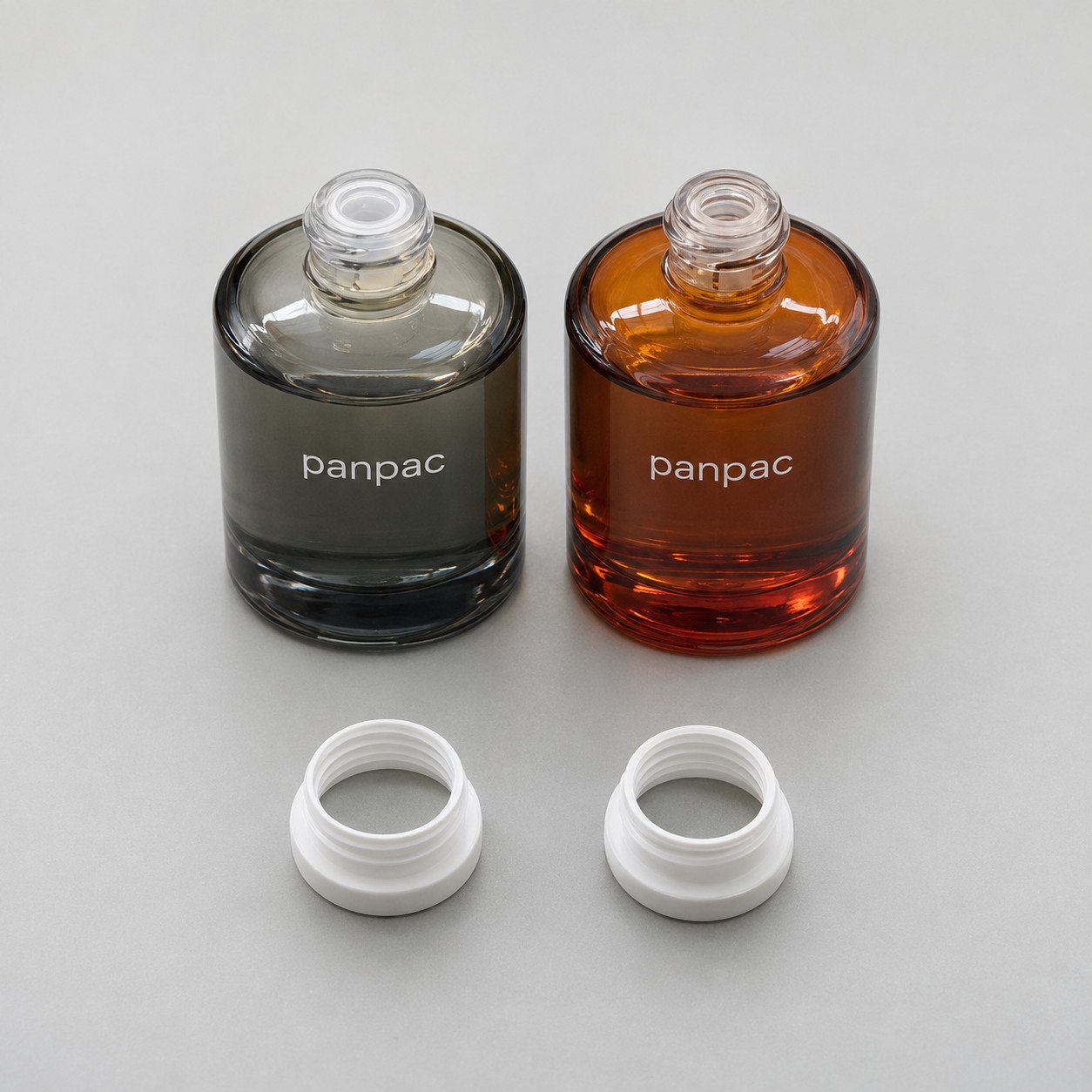
A dry empty sample does not tell you how a filled perfume pack will behave. A useful leak review starts with the assembly, formula and filling process.
Find the leak path before changing the bottle
Record whether liquid appears at the neck, pump outlet, roller insert or damaged glass. Photograph the condition before cleaning the pack. Keep the bottle, closure and packing together so the team can investigate the assembly rather than replace a component on guesswork.
A wet actuator does not automatically prove a failed neck seal. Residue from filling or unintended actuation can resemble leakage. Ask the filler to distinguish those possibilities and document when the wetness first appeared.
Agree a test plan with meaningful conditions
Specify the proposed formula, fill level, closure application method and sample identification. Agree orientation, duration, environmental conditions and the method for recording a failure with the parties responsible for the pack. There is no universal temperature or vacuum threshold that can responsibly be copied into every perfume project.
Evaluate a sample representative of the intended bulk assembly. A hand-selected showroom pack using a different gasket or pump is not evidence for the order. Record component revisions so any later change triggers a review of its effect.
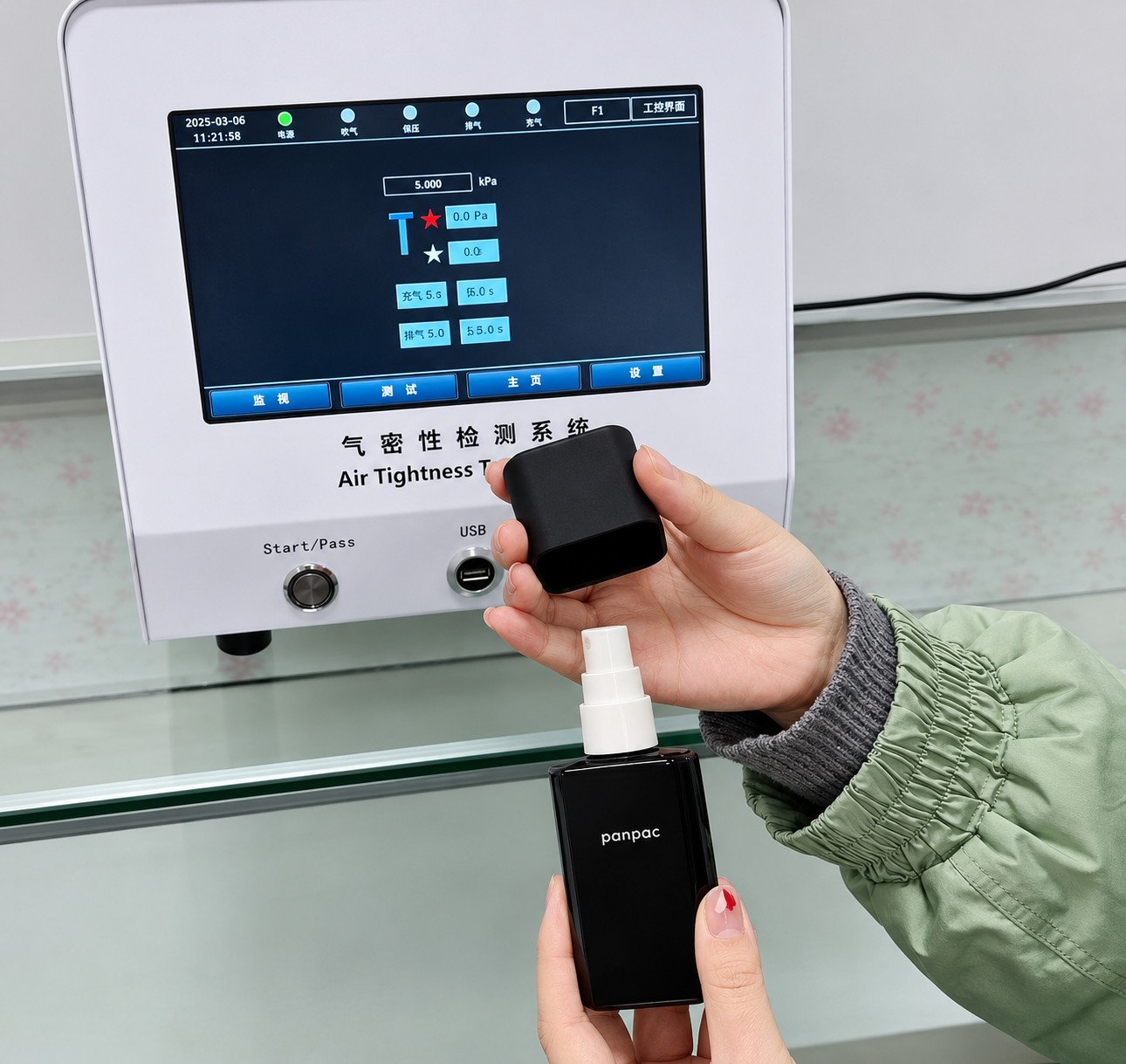
Watch: Perfume bottle leak test walkthrough
Video short — watch on YouTube
Separate component inspection from filled-pack evaluation
Inspect the bottle neck and closure against approved specifications, then assess the filled assembly under the agreed plan. A dimensional result answers a different question from a leak observation. Neither should be used to imply the other has been completed.
PANPAC has quality staff and inspection equipment, but the available check, method and acceptance limit must be confirmed for your project. Formula compatibility and filling-line validation should be assigned explicitly; do not leave them between the packaging supplier and the filler.
For the next decision, read Crimp vs Screw-Neck Perfume Bottles: What Buyers Need to Decide.
Close the loop before releasing the lot
Ask how failed samples will be identified, isolated and investigated. If the corrective action changes the closure, application setting or bottle specification, repeat the relevant evaluation before accepting the change. Keep a record of the revised reference.
Protective packing should also prevent movement or accidental pump operation in the intended distribution setup. It is not a substitute for a functioning seal. A claim of “leakproof” without defined conditions tells a buyer less than a clearly documented test result.
How to investigate perfume bottles leaking during shipping
Separate the seal investigation from the distribution investigation. Record how the pack was assembled, its position in the carton and whether the actuator could move. Compare the condition of affected and unaffected units. A complaint photograph is useful evidence, but it rarely establishes the root cause by itself. Ask the responsible teams to explain what evidence would distinguish a sealing problem from accidental dispensing or transit damage.
When reviewing perfume packaging seal testing, request the actual method and result format. A statement that a pack passed inspection is incomplete without knowing what was inspected. Ask how samples were selected, what constituted a failure and which configuration was evaluated. Do not infer that a supplier tested your formula simply because they own inspection equipment. That responsibility must be agreed explicitly.
Keep a useful failure record
Create a record containing the order reference, component references, filling date if available, observed leak location and photographs. Preserve representative units before modifying them. Record the proposed correction and who approves it, then link the repeat evaluation to that correction. This approach helps a buyer discuss how to prevent perfume bottle leaks without jumping straight to a replacement material or a stronger closure application that may create a different problem.
Keep the approval useful
A useful inspection report should help someone who was not present understand the result. Include sample identification, the observation and the agreed disposition. Keep images of failures separate from generic equipment photographs. If the supplier proposes rework, ask how reworked units will be identified and reviewed. The objective is to resolve the observed issue under defined conditions, rather than collect a reassuring photograph of a test machine.
What to send PANPAC
Attach your reference image or drawing, intended fill, component requirements, decoration, quantity per design and target market. Tell us which decisions are fixed and where alternatives are welcome. Our team can coordinate design support, engineering questions and the agreed quality checks before a configuration is quoted.
Explore our fragrance packaging collection or send your project brief. PANPAC supplies empty packaging; filling and formula validation responsibilities should be agreed with your team and filling partner.
Discuss your pack inspection requirements
Bring your packaging questions to PANPAC. We can review the format, custom finish and sampling requirements together.
Discuss Your ProjectFrequently asked questions
What information helps PANPAC investigate a leaking perfume pack?
Share the assembly references, formula information your technical team can disclose, filling method, photographs and when the issue appeared. PANPAC can coordinate the packaging questions with your team. Keep the original parts available; replacing or cleaning everything first can remove useful evidence.
Can an empty-bottle inspection prove the perfume will not leak?
No. A perfume bottle leakage test should address the intended filled assembly and agreed conditions. Empty component inspection is one part of the review.
Does PANPAC guarantee zero leakage?
PANPAC can discuss project-specific inspection and sample evaluation for custom fragrance packaging. A blanket zero-leak guarantee across unknown formulas, filling methods and distribution conditions would be misleading.